Welcome! This manual guides safe, correct operation of your AUX unit. Read thoroughly before use; it’s designed for standard human comfort applications.
Understanding the Manual’s Purpose
This manual is your comprehensive guide to maximizing the performance and lifespan of your AUX air conditioner. It details safe operation, essential maintenance, and troubleshooting steps. Before installation or use, carefully review all sections to ensure proper functionality and avoid potential hazards.
Understanding the remote control functions and error codes will empower you to efficiently manage your climate control system. This document aims to provide clarity and confidence in operating your AUX unit.
Safety Precautions
Important: Disconnect power before cleaning or maintenance. Do not operate with a damaged cord or plug. Avoid inserting objects into the unit. This air conditioner is designed for standard cooling and should not be used for other applications without consulting a professional.
Ensure proper grounding and avoid exposing the unit to excessive moisture. Never attempt self-repair; contact qualified personnel for servicing. Prioritize safety to prevent electrical shock or fire hazards.

Components and Features
Discover your AUX system’s parts! This includes indoor and outdoor units, plus a feature-rich remote control for convenient, customized climate control.
Indoor Unit Overview
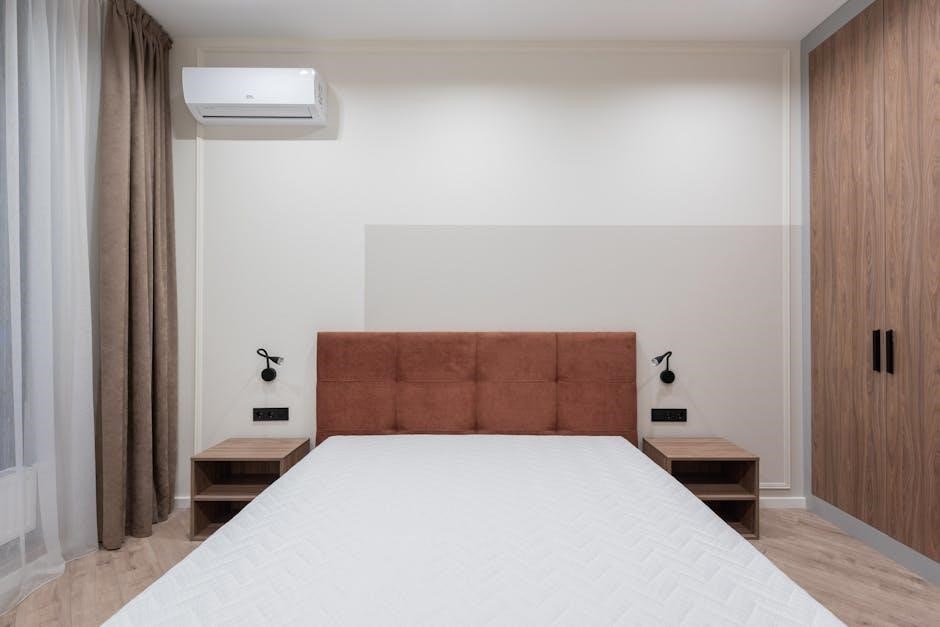
The indoor unit distributes conditioned air into your space. Key components include the air filter, responsible for capturing dust and allergens, ensuring clean airflow. The cooling coil facilitates heat exchange, while the fan motor circulates air throughout the room. Observe the front panel, housing the display and control buttons for basic adjustments. Note the air inlet and outlet vents, crucial for optimal air circulation and efficiency. Regular inspection of these components contributes to peak performance and longevity.
Outdoor Unit Overview

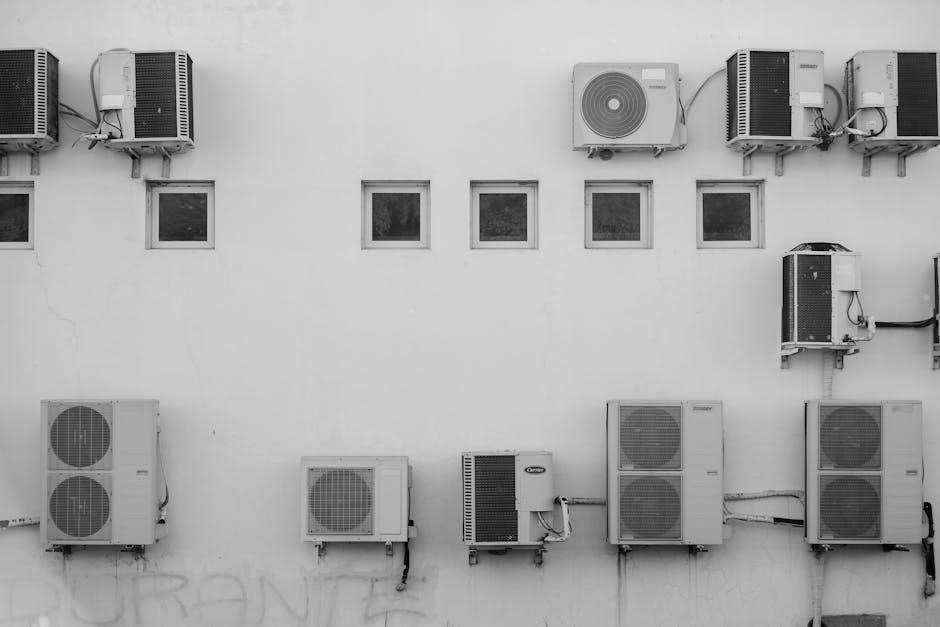
The outdoor unit dissipates heat removed from your indoor space. It houses the compressor, the core of the cooling process, and the condenser coil, where heat is released. Pay attention to the fan, which draws air across the condenser for efficient heat exchange. Ensure adequate clearance around the unit for proper ventilation. Inspect the connections for any damage. Protecting this unit from debris and weather elements is vital for reliable operation and extended lifespan.
Remote Control Functions
Your AUX remote offers comprehensive control. The power button initiates operation. Mode selection allows choosing Cool, Heat, Dry, or Auto. Fan speed adjusts airflow – Low, Medium, High, or Auto. Temperature setting dictates desired comfort levels. Utilize the timer for scheduled operation. Explore additional functions like sleep mode for optimized comfort and energy savings. Familiarize yourself with each button for a personalized experience.

Operating Instructions
Begin by powering on the unit. Select your desired mode – Cool, Heat, Dry, or Auto – and adjust fan speed and temperature accordingly.
Powering On and Off
To power on your AUX air conditioner, press the power button on either the unit itself or the remote control. A confirmation light will illuminate, indicating operation. To power off, simply press the power button again. Ensure the unit is unplugged during extended periods of non-use for safety and energy conservation. Some models feature a sleep/wake function for convenient operation. Always allow a few minutes for the unit to fully shut down before restarting to prevent compressor damage.
Mode Selection (Cool, Heat, Dry, Auto)
Your AUX air conditioner offers several modes. Cool lowers the room temperature. Heat provides warmth. Dry reduces humidity, ideal for damp climates. Auto intelligently adjusts cooling and heating based on the room temperature. Select your desired mode using the remote control’s mode button. The current mode is displayed on the unit’s front panel. Ensure proper ventilation when using heat mode for optimal efficiency and safety.
Fan Speed Adjustment
Control airflow with the fan speed settings. Your AUX unit typically offers Low, Medium, High, and Auto fan speeds. Use the remote control to select your preferred setting. Auto mode adjusts fan speed for optimal comfort and energy efficiency. Lower speeds are quieter, while higher speeds provide faster cooling or heating. Experiment to find the balance that suits your needs and room size.
Temperature Setting
Adjust the desired room temperature using the Up and Down buttons on your remote control. The display shows the set temperature. Your AUX air conditioner operates within a specific range, typically 16°C to 30°C (61°F to 86°F). For efficient operation, avoid extreme temperature differences between indoors and outdoors. Utilize the Auto mode for intelligent temperature management and consistent comfort.

Maintenance and Care
Regular cleaning of filters and coils ensures optimal performance and air quality. Replace remote control batteries as needed for continued operation.
Filter Cleaning
Maintaining clean filters is crucial for efficient operation and air quality. Turn off the unit and disconnect power before cleaning. Gently remove filters, and vacuum away dust. For deeper cleaning, wash with mild detergent and water, ensuring they are completely dry before reinstalling. Inspect filters regularly – typically every two weeks – and clean or replace as needed. A clogged filter reduces airflow and increases energy consumption, impacting cooling or heating performance.
Coil Cleaning
Regular coil cleaning maximizes efficiency. Disconnect power before starting. The outdoor unit’s coils collect debris; use a soft brush or coil cleaner (available at appliance stores) to gently remove dirt. For the indoor unit, carefully clean the evaporator coil, avoiding damage to fins. Professional cleaning is recommended annually for optimal performance. Dirty coils reduce heat transfer, forcing the unit to work harder and increasing energy bills.
Remote Control Battery Replacement
Low battery power causes unreliable operation. To replace, slide off the battery cover (usually on the back of the remote). Install new AAA or AA batteries, matching the polarity (+ and -) indicated inside the compartment. Ensure batteries are inserted correctly for proper function. Dispose of old batteries responsibly. A fresh set of batteries will restore full remote control capabilities.

Troubleshooting
Encountering issues? Consult the error code list or address basic problems. Refer to the manual for solutions and support information for your AUX unit.
Common Error Codes
Understanding error codes is crucial for diagnosing AUX air conditioner issues. The service manual details specific codes, such as those found in AUX_LCAC_Inverter_R32.pdf. These codes indicate problems with components like the compressor, sensors, or fan motors.
For example, a specific code might signal a refrigerant leak, while another could point to a faulty temperature sensor. Always consult the full error code list within the manual for accurate interpretation and recommended troubleshooting steps before contacting service.
Addressing Basic Issues
Before calling for service, attempt basic troubleshooting. Ensure the unit is powered on and the remote batteries are fresh. Check the air filter for blockage – a common cause of reduced airflow. Verify that outdoor unit vents aren’t obstructed by debris.
If the unit isn’t cooling, confirm the selected mode is ‘Cool’ and the temperature is set appropriately. Refer to the manual for specific error code solutions if displayed.

Technical Specifications
AUX units utilize R410A refrigerant and DC Inverter technology. Detailed model-specific power consumption, dimensions, and weight data are found within.
Model Specific Details (R410A, DC Inverter)
AUX employs R410A refrigerant, known for its efficiency and environmental considerations. DC Inverter technology allows for variable speed operation, providing precise temperature control and energy savings.
These units feature AC-M2 motors for fan operation and utilize electronic expansion valves (EVL1). Specific technical catalogs detail individual model capacities and performance characteristics. Always refer to your unit’s specific documentation for accurate specifications, as features vary between models.
Power Consumption
AUX air conditioners, particularly DC Inverter models, are designed for energy efficiency. Actual power consumption varies based on cooling/heating mode, set temperature, fan speed, and ambient conditions.
Refer to the unit’s energy label and technical specifications for detailed power input and estimated energy usage. Utilizing features like sleep mode and optimized temperature settings can further reduce consumption. Always ensure proper installation for optimal performance and minimized energy waste.
Dimensions and Weight
AUX air conditioner dimensions and weight vary significantly by model; The outdoor unit, housing the compressor, is generally heavier and larger than the indoor unit.
Precise measurements for both units – height, width, depth – are crucial for proper installation and mounting. Refer to the model-specific technical specifications within this manual or on the product label for accurate details. Weight is important for bracket selection and wall support considerations.

Installation Guidelines (Brief Overview)
Professional installation is highly recommended for optimal performance and safety. Consider mounting location carefully, ensuring adequate space and structural support for the unit.
Professional Installation Recommended
Proper installation is crucial for your AUX air conditioner’s efficiency and longevity. Qualified technicians possess the expertise to correctly handle refrigerant lines, electrical connections, and vacuum sealing.
Incorrect installation can lead to reduced cooling/heating capacity, system malfunctions, and potential safety hazards. Always adhere to local regulations and building codes. Utilizing a professional ensures compliance and maximizes your unit’s performance, safeguarding your investment and comfort.
Mounting Considerations
Secure mounting is vital for quiet operation and preventing vibrations. Ensure the wall can support the unit’s weight, considering both indoor and outdoor components.
Maintain sufficient clearance around the units for airflow and servicing – avoid obstructions like furniture or curtains. Proper leveling is essential for condensate drainage; Select a location protected from direct sunlight and extreme weather. Follow all local building codes regarding mounting height and proximity to other structures.
Warranty Information
Coverage details and the claim process are outlined within this manual. Retain proof of purchase for warranty service requests and eligibility.
Coverage Details
AUX air conditioner warranties vary by model; refer to your specific unit’s documentation for precise terms. Generally, coverage includes defects in materials and workmanship for a defined period from the purchase date. This warranty typically covers parts and, in some cases, labor costs associated with repair or replacement.
However, it does not cover damage resulting from improper installation, misuse, neglect, or unauthorized modifications. Maintaining proper maintenance, like filter cleaning, is crucial for warranty validity. Keep your purchase receipt as proof of date!
Claim Process
To initiate a warranty claim, contact AUX customer support with your model number, serial number, and proof of purchase. A representative will guide you through the process, potentially requiring diagnostic information or photos of the issue.
Approved claims may involve authorized service technicians dispatched to your location, or instructions for returning the unit for repair or replacement. Retain all documentation related to your claim for future reference.
AUX Air Conditioner Climate Suitability
AUX units perform optimally in Csa climates, like Athens, with average 17.5°C (63.6°F) temperatures and approximately 378mm (14.9 inches) of annual rainfall.
Optimal Climate for AUX Units (Csa Climate)
AUX air conditioners demonstrate peak efficiency within a Csa climate – characterized by hot, dry summers and mild, wet winters. Cities like Athens exemplify this, boasting average annual temperatures around 17.5°C (63.6°F).
These units are well-suited to handle moderate humidity and temperature fluctuations common in this zone. Performance remains consistent with roughly 378mm (14.9 inches) of yearly precipitation. Prioritizing use during May-October aligns with Greece’s peak travel season and warm conditions.
Performance in Varying Temperatures
While optimized for Csa climates, AUX units function across a broader temperature range. However, extreme conditions may impact efficiency. Consistent performance is expected during typical seasonal shifts experienced in regions like Greece – from cooler spring months to warmer autumn days.
Detailed weather data for specific locations (Athens, Thessaloníki, Irákleion) reveals predictable patterns, allowing for informed usage. Remember, prioritizing operation within the designed climate maximizes longevity and cooling/heating capabilities.